Skip to content
Du Shu Reading · Be first to know when the shop opens

Join the Du Shu Movement

Read deeply. Elevate your learning. Learn from masters of learning whose wisdom has stood for millennia, yet feels so relevant for today.

  • Analects Editions
  • Y&Y
  • The Tao Collection
  • Junzi Jade
  • Du Shu Life
温故而知新

“Review what you have studied and come to understand something new,and you are fit to be a teacher.”

Analects 2.11
The Du Shu story

Two characters, one instruction

读书 (dúshū) is how Mandarin says “to read.” Not skim, not scroll: read. It is the word for sitting with a book long enough that you come out the other side knowing something you didn't. That is the movement: one reader, one book, one deliberate step at a time.

读

dú, to read

Built on 讠, the radical for speech, the same root in the characters for “to speak” and “to discuss.”

For most of its history, reading in China meant reading aloud: recited, memorized, argued back at. To 读 something is to give it your voice, not just your eyes.

书

shū, book, writing

The traditional form, 書, shows a hand holding a brush directly above 曰, “to say”: speech being fixed into something lasting.

So the character for “book” isn't a picture of an object. It's a picture of someone making one. Every book you pick up began as a hand moving.

Together they read less like a hobby and more like an instruction: read closely, chase what you don't yet know, and come back changed. Knowledge is something you go after, book by book, on purpose.

Why we're saying it now

Most of what competes for your attention is designed to hold it briefly and hand you nothing. A book asks for more and returns more: the slow, deliberate kind of learning that actually compounds into who you become.

Chinese scholarly culture built centuries of infrastructure around that idea: papermaking that put texts within reach, printing that predated Gutenberg's press by centuries, and an examination tradition that made deep reading a lifelong pursuit rather than a school-years chore. That's what these two characters carry: a reminder, worn plainly, to keep reading and keep advancing.

The masters of learning

Wisdom that has stood for millennia

The teachers we read have outlasted empires. Their questions about learning, friendship and how to live still feel written for today. Join the movement and read them for yourself.

Illustrated timeline, 2,500 years of perspective. Ancient wisdom. A modern perspective. Across a Chinese landscape painting: Confucius 551 to 479 BCE, a teacher's life; Dao De Jing c. 400 to 250 BCE, textual formation; Roman Empire 27 BCE, begins under Augustus; Magna Carta 1215 CE, sealed at Runnymede; Renaissance c. 1300 CE, begins in Europe; Today 2026, old questions, still alive.
The Du Shu Movement

A lifelong practice of learning

Every reader begins the same way: one book, one quiet hour, one question worth following. To read deeply is to slow down long enough for an idea to change you, and the lifelong learner keeps coming back, to the page and to the masters of learning whose wisdom has withstood millennia of time, yet feels so relevant for today.

The thinkers of early China asked how to learn, how to live well together and how to see the world clearly. Their questions have travelled more than two thousand years because they are still our questions. Reading them closely, and thinking them through, is how we grow.

“We are bringing to the Du Shu Shop the wisdom and other treasures inspired by immersing ourselves to be lifelong learners.”

Steve Potash, Du Shu Reading

Our family of brands

Analects Editions

论语Lúnyǔ
Analects Editions · A Du Shu Reading brand

Learn from the masters

Our library gathers the Classics of Early Chinese Thought, not only the words of Confucius. Most of these works come from the Spring and Autumn and Warring States periods, roughly 770 to 221 BCE, the age of the Hundred Schools of Thought. They have been read, recited and argued over for more than two thousand years, and they still speak to how we learn, work and live together.

The Analects preserves teachings and conversations associated with Confucius, gathered and compiled by later generations rather than written by Confucius himself. Some classics hold material older than Confucius; others took shape long after him.

  • Print and Digital Edition. Each title comes in Print and Digital Edition, so you can read it the way you like.
  • Bilingual. The original text in traditional Chinese (繁體中文) with a facing English translation, starting from James Legge's classic translations where he translated the work.
  • Open Adaptive Editions. Living, versioned editions that stay current as you learn and grow with you on your lifelong learning journey.
PrintDigital Edition

About the translator: James Legge

James Legge (1815 to 1897) was a Scottish missionary and scholar who spent about 30 years in Hong Kong and in 1876 became Oxford's first Professor of Chinese. His The Chinese Classics (1861 to 1872) set the original texts beside his English translations; the Analects appears in volume 1 (1861). Where another translator is needed, the title says so.

Painted portrait of Confucius seated in dark scholar's robes
Confucius, gouache on paper, c. 1770. Public domain, via Wikimedia Commons.
The Jade Classics · The Analects Editions print series

The Jade Classics: build your home library

Twenty-four works, AE-001 to AE-024, in eight series, each with its own color and spirit: Heart of Virtue, The Scholar's Lamp, The Quiet Way, Blossom and Verse, Roots of Culture, Wise Counsel, Living Well and The Healing Garden. Every cover keeps its painted landscape, the deep green band and the Analects Editions mark, so the whole library reads as one collection on the shelf. Bilingual print editions made to be collected: to keep, to return to, and to hand down.

The Collector's Set: all 24 Jade Classics spines lined up on a warm wooden library shelf, in eight series colors, one for each series, each spine with its Chinese and English title, volume number and the Analects Editions mark
The Collector's Set The complete library, all eight series, spine by spine.
  • Heart of VirtueInspired by Confucius
  • The Scholar's LampLearning and Knowledge
  • The Quiet WayDaoism & Perspective
  • Blossom and VersePoetry & Everyday Life
  • Roots of CultureClassics & Cultural Foundations
  • Wise CounselEthics, Strategy & Governance
  • Living WellHealth & Wellness (Historical)
  • The Healing GardenTraditional Chinese Medicine

A matching set

Eight series colors, one deep green band, one Analects Editions mark: each series reads as a set, and the twenty-four together read as one library.

A keepsake edition

Traditional Chinese beside English: a book to read closely now and to pass on to the next reader in the family.

Grows with you

Start with the Analects and add a series at a time. Collect a series at a time, begin with a starter set, or bring home the complete library.

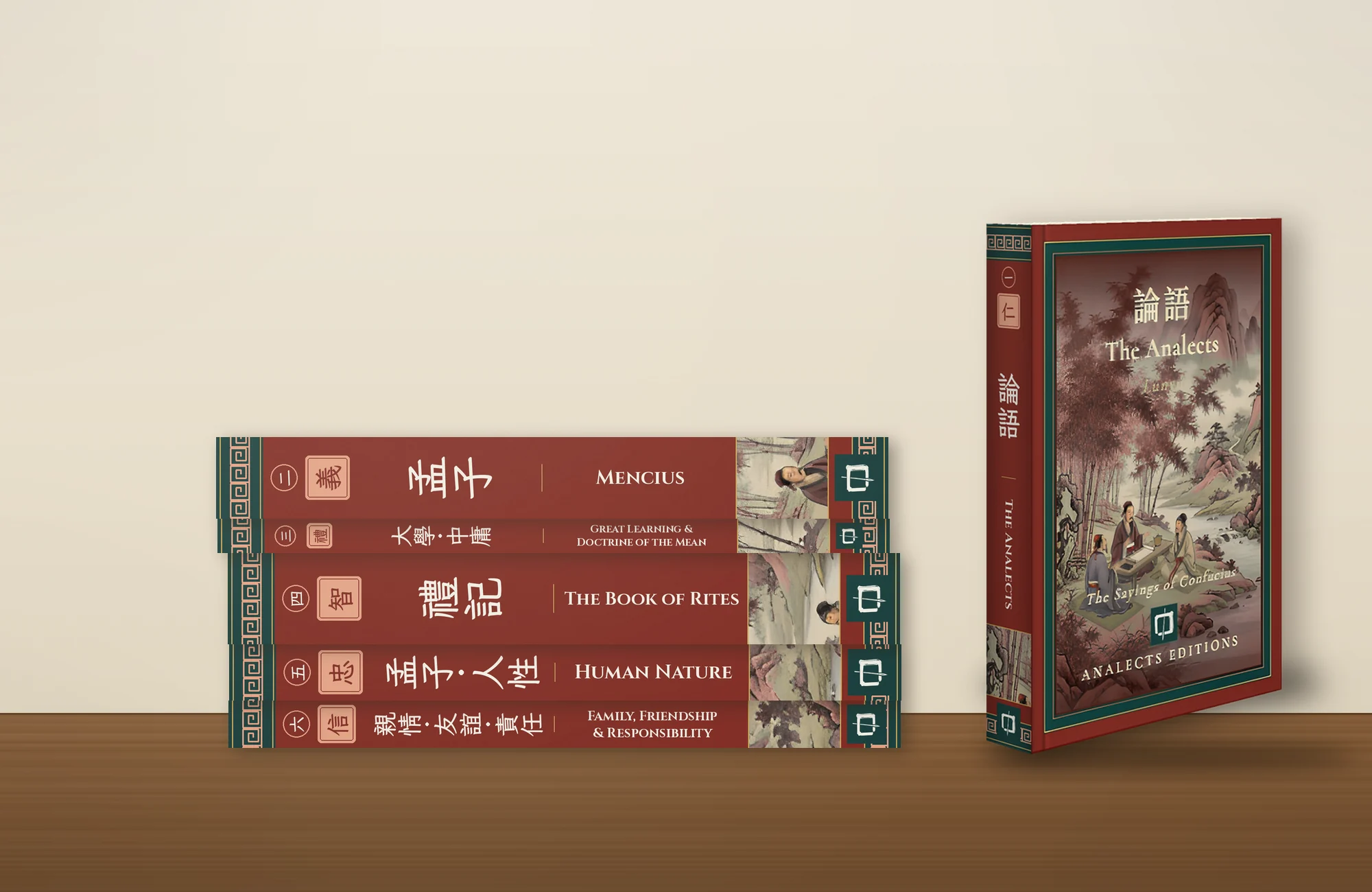
The Collector's Set: five Inspired by Confucius titles stacked on a table, Mencius, The Great Learning and The Doctrine of the Mean, The Book of Rites, Human Nature and Family, Friendship and Responsibility, with The Analects standing beside them
The Collector's Set Inspired by Confucius, Heart of Virtue: six titles.
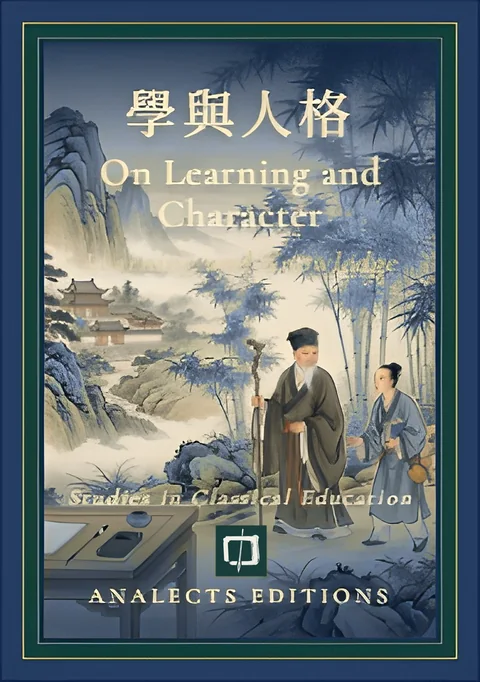
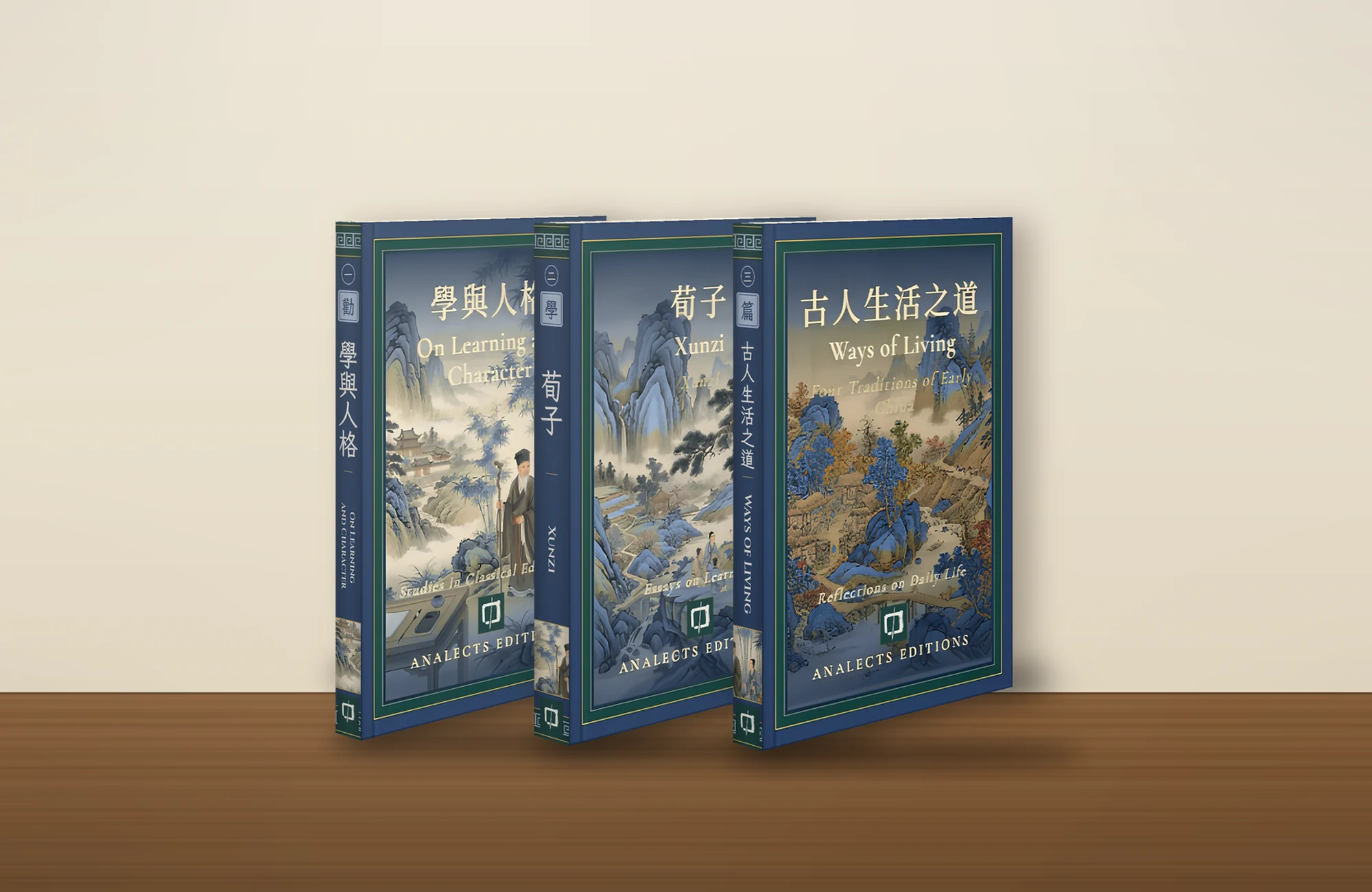
The Collector's Set: the three Learning and Knowledge titles standing together at a three-quarter angle, On Learning and Character, Xunzi: Essays on Learning and Ways of Living
The Collector's Set Learning and Knowledge, The Scholar’s Lamp: a three-book set.
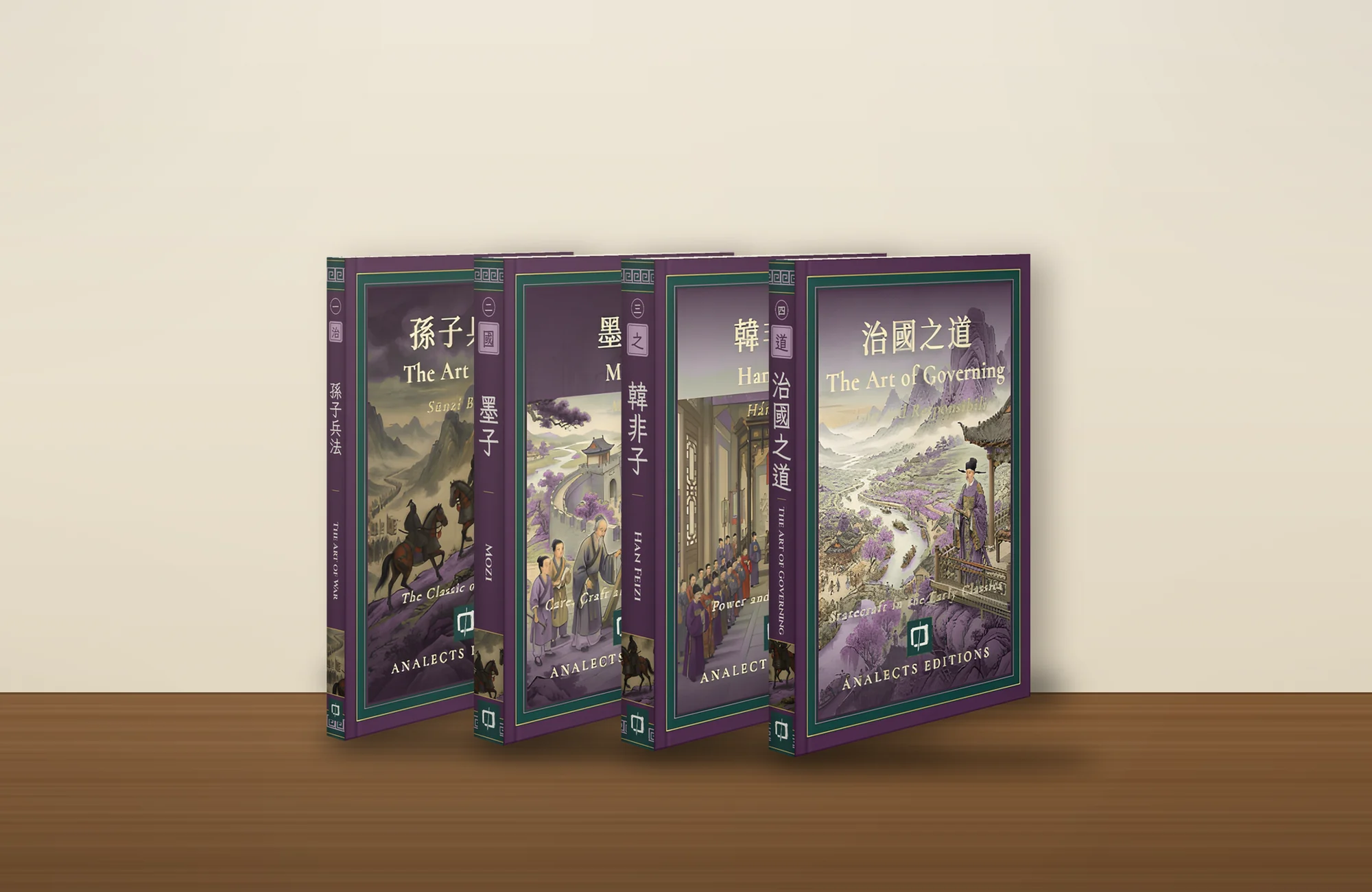
The Collector's Set: the four Ethics, Strategy and Governance titles standing together at a three-quarter angle, The Art of War, Mozi, Han Feizi and The Art of Governing
The Collector's Set Ethics, Strategy & Governance, Wise Counsel: a four-book set.
Ancient landscapes, series colors

Every cover, a painting

Each title carries its own scene in the manner of Chinese landscape painting, tinted to its series color, with its Chinese title, English title and the Analects Editions 中 mark. Spines carry the volume number, a seal with one character of the series motto, and the titles in Chinese and English.

PrintDigital Edition

The Jade Classics: the eight series

Inspired by Confucius

Heart of Virtue · 6 titles

The heart of the library: the Analects and the wider Confucian tradition, from Mencius on human nature to the Great Learning and the Book of Rites. These are books about becoming a better person in the company of others, through study, family, friendship and duty. For a lifelong learner they are the place to begin, and the place to keep returning.

  • The Analects 論語 AE-001
  • Mencius: Selected Dialogues 孟子 AE-005
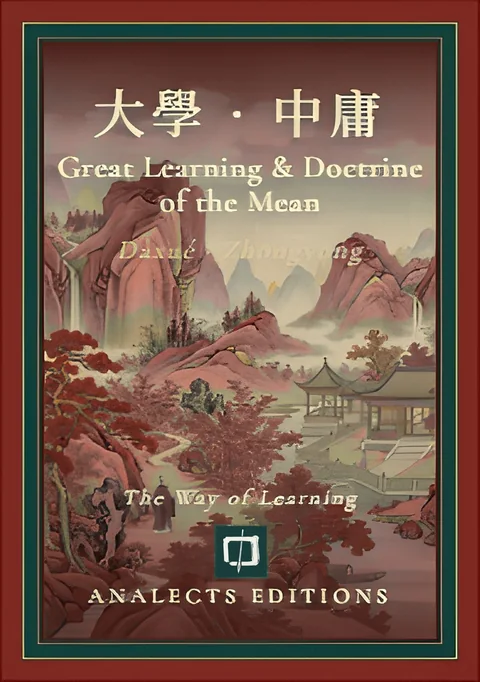
  • The Great Learning and The Doctrine of the Mean 大學 / 中庸 AE-007
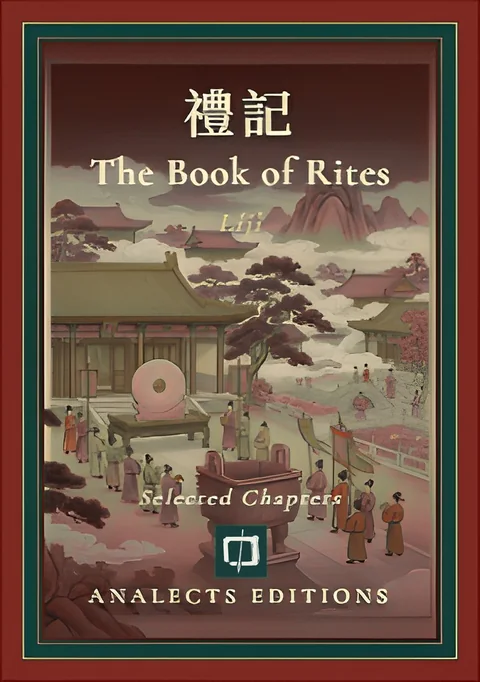
  • The Book of Rites: Selected Chapters 禮記 AE-014
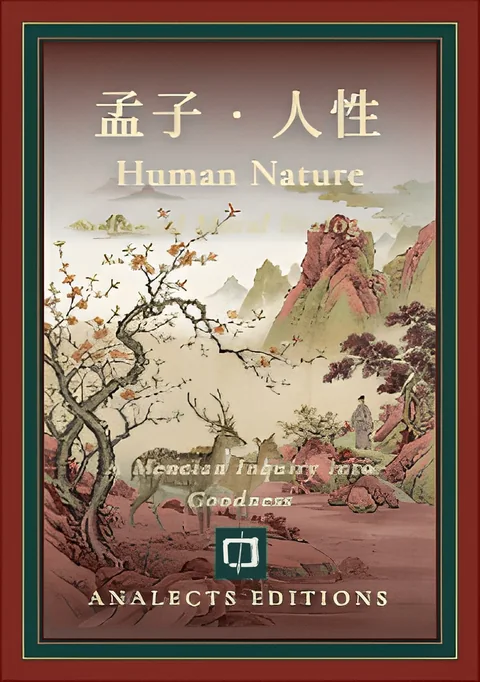
  • Human Nature: Mencius and Xunzi in Dialogue 孟子 / 荀子(選篇) AE-019
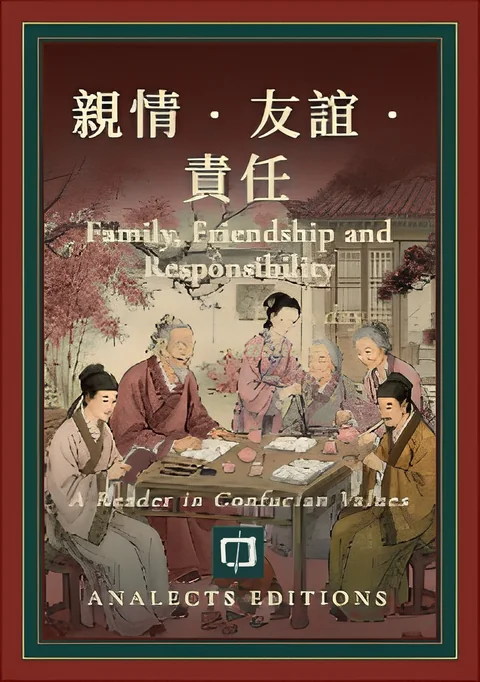
  • Family, Friendship and Responsibility AE-023

PrintDigital Edition Bilingual, traditional Chinese with facing English. English translations by James Legge.
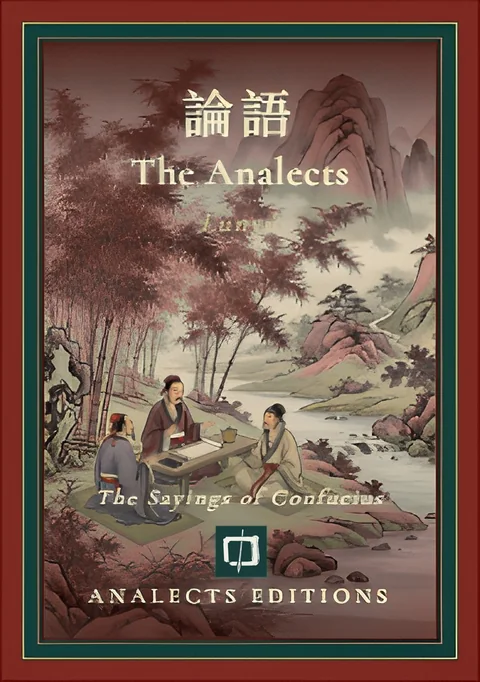
The Jade Classics cover, Inspired by Confucius series: The Analects
The AnalectsAE-001
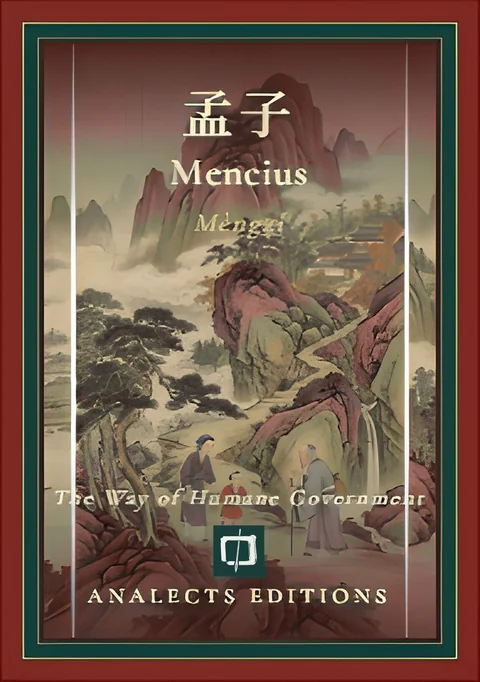
The Jade Classics cover, Inspired by Confucius series: Mencius: Selected Dialogues
Mencius: Selected DialoguesAE-005
The Jade Classics cover, Inspired by Confucius series: The Great Learning and The Doctrine of the Mean
The Great Learning and The Doctrine of the MeanAE-007
The Jade Classics cover, Inspired by Confucius series: The Book of Rites: Selected Chapters
The Book of Rites: Selected ChaptersAE-014
The Jade Classics cover, Inspired by Confucius series: Human Nature: Mencius and Xunzi in Dialogue
Human Nature: Mencius and Xunzi in DialogueAE-019
The Jade Classics cover, Inspired by Confucius series: Family, Friendship and Responsibility
Family, Friendship and ResponsibilityAE-023

Learning and Knowledge

The Scholar's Lamp · 3 titles

Books for anyone pursuing learning for its own sake: why study mattered so much in early Chinese thought, Xunzi's essays on education and practice, and a reader comparing how four traditions answer how to live. Together they treat learning as a lifelong craft, built one patient day at a time.

  • On Learning and Character AE-008
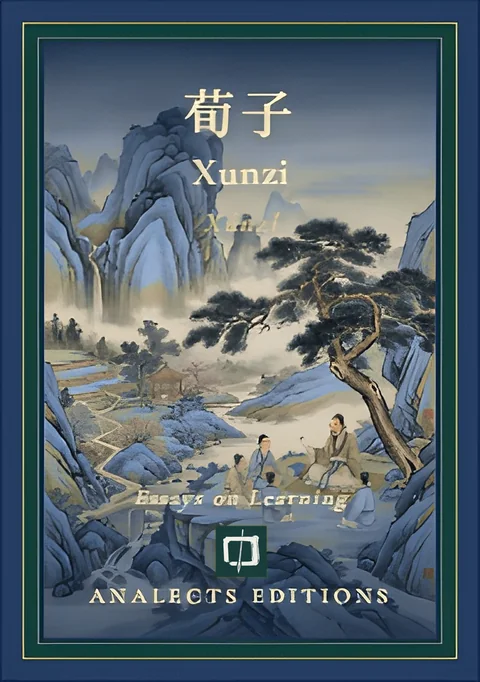
  • Xunzi: Essays on Learning 荀子 AE-009
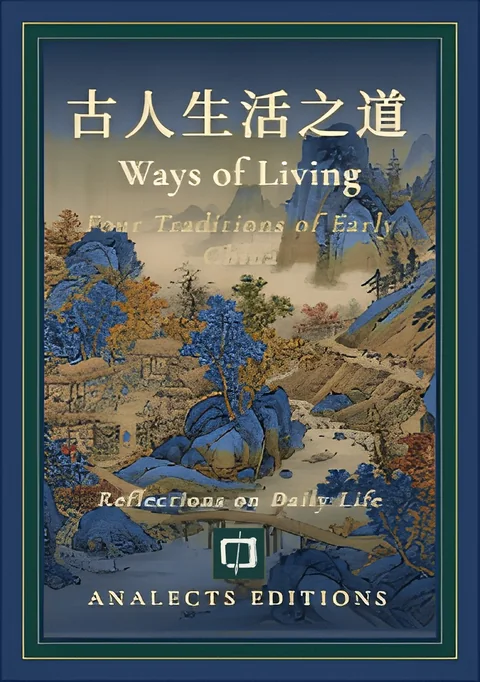
  • Ways of Living: Four Traditions of Early China AE-024

PrintDigital Edition Bilingual, traditional Chinese with facing English. English by James Legge where he translated the work.

The Jade Classics cover, Learning and Knowledge series: On Learning and Character
On Learning and CharacterAE-008
The Jade Classics cover, Learning and Knowledge series: Xunzi: Essays on Learning
Xunzi: Essays on LearningAE-009
The Jade Classics cover, Learning and Knowledge series: Ways of Living: Four Traditions of Early China
Ways of Living: Four Traditions of Early ChinaAE-024

Daoism & Perspective

The Quiet Way · 3 titles

The Dao De Jing, the Zhuangzi and the Daoist art of seeing things differently. Short, poetic and often playful, these classics loosen fixed ideas and invite us to look again from more than one point of view. A quiet counterweight to a hurried age.

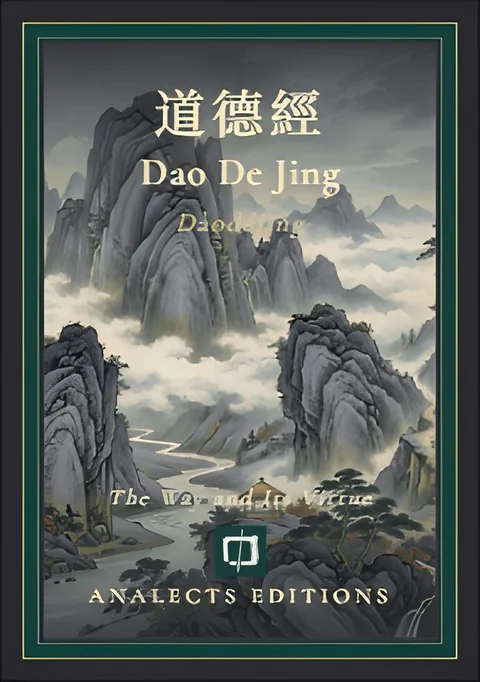
  • Dao De Jing 道德經 AE-002
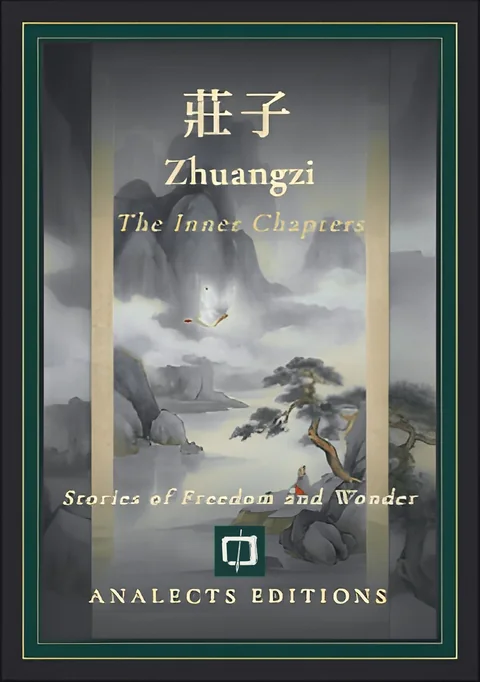
  • Zhuangzi: Selected Stories and Parables 莊子 AE-004
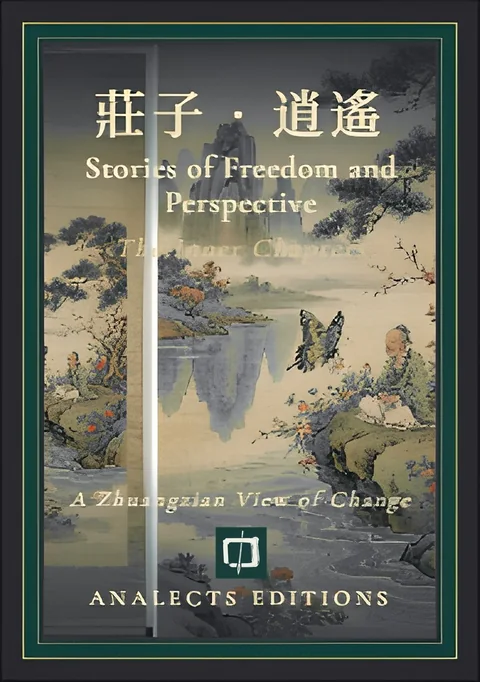
  • Stories of Freedom and Perspective 莊子(選篇) AE-021

PrintDigital Edition Bilingual, traditional Chinese with facing English. English translations by James Legge.
The Jade Classics cover, Daoism & Perspective series: Dao De Jing
Dao De JingAE-002
The Jade Classics cover, Daoism & Perspective series: Zhuangzi: Selected Stories and Parables
Zhuangzi: Selected Stories and ParablesAE-004
The Jade Classics cover, Daoism & Perspective series: Stories of Freedom and Perspective
Stories of Freedom and PerspectiveAE-021

Poetry & Everyday Life

Blossom and Verse · 2 titles

Songs and poems from the Book of Songs, China's oldest anthology of verse, and the daily lives they record: courtship, farming, feasts, work and family. Read closely, the distance of the centuries falls away and ordinary people speak to us directly.

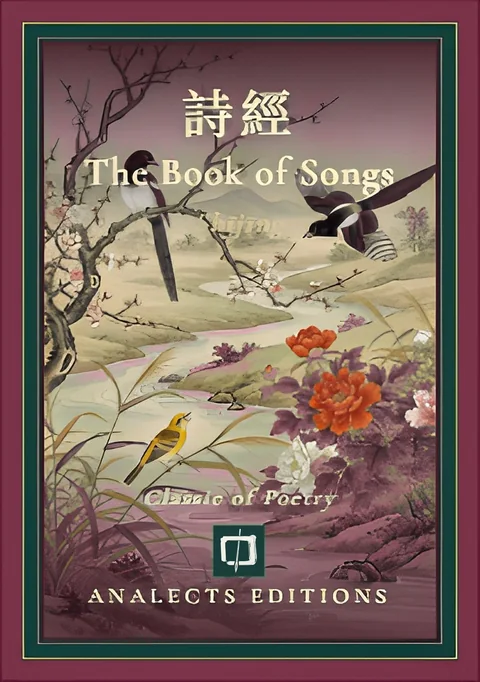
  • The Book of Songs: Selected Poems 詩經 AE-006
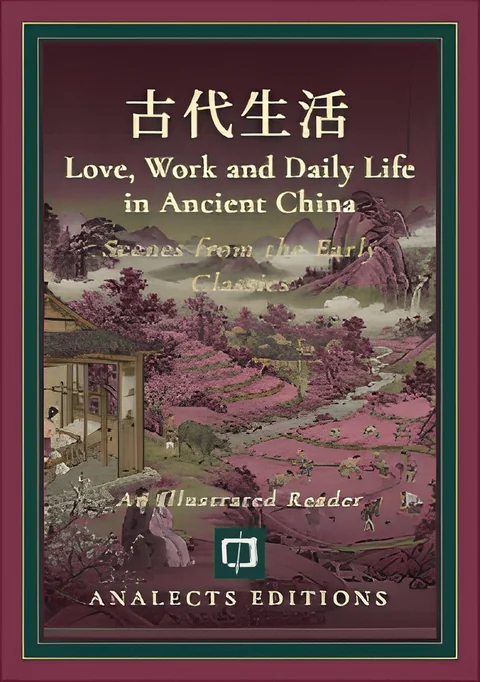
  • Love, Work and Daily Life in Ancient China 詩經(選篇) AE-022

PrintDigital Edition Bilingual, traditional Chinese with facing English. English translations by James Legge.
The Jade Classics cover, Poetry & Everyday Life series: The Book of Songs: Selected Poems
The Book of Songs: Selected PoemsAE-006
The Jade Classics cover, Poetry & Everyday Life series: Love, Work and Daily Life in Ancient China
Love, Work and Daily Life in Ancient ChinaAE-022

Classics & Cultural Foundations

Roots of Culture · 3 titles

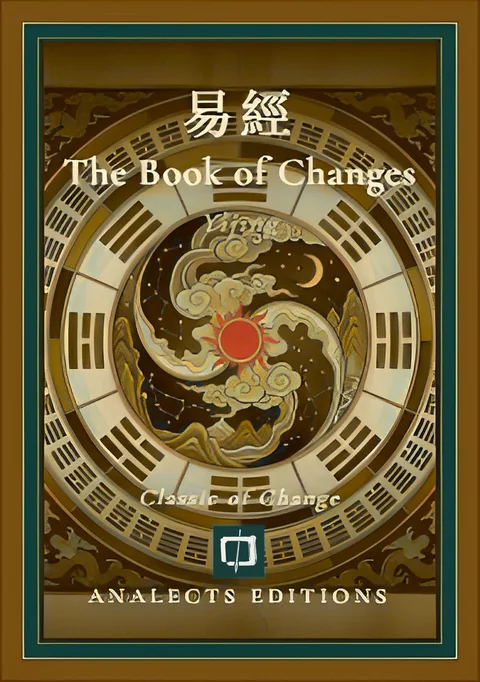
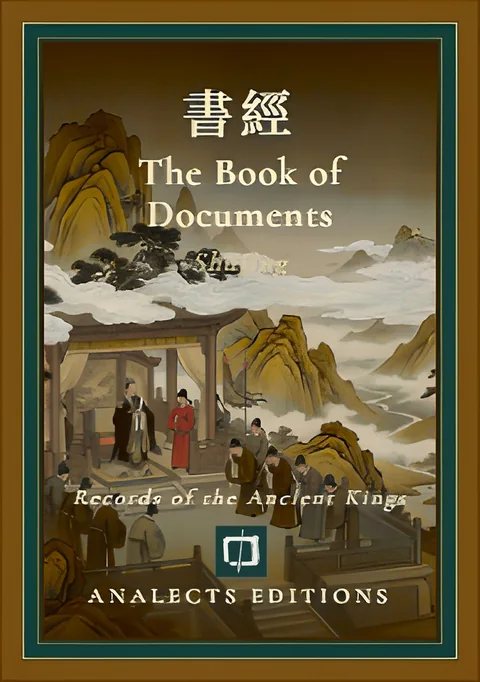
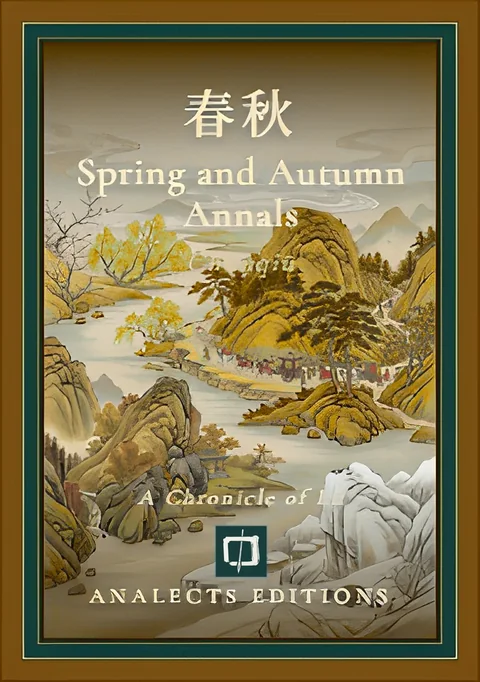
The early classics of divination, statecraft and history that shaped Chinese culture: the Book of Changes, the Book of Documents and the Spring and Autumn Annals. Later thinkers quoted them, argued with them and built upon them, so knowing them opens every other book on the shelf.

  • The Book of Changes 易經 AE-012
  • The Book of Documents: Selected Speeches 書經 / 尚書 AE-013
  • Spring and Autumn Annals 春秋 AE-015

PrintDigital Edition Bilingual, traditional Chinese with facing English. English translations by James Legge.
The Jade Classics cover, Classics & Cultural Foundations series: The Book of Changes
The Book of ChangesAE-012
The Jade Classics cover, Classics & Cultural Foundations series: The Book of Documents: Selected Speeches
The Book of Documents: Selected SpeechesAE-013
The Jade Classics cover, Classics & Cultural Foundations series: Spring and Autumn Annals
Spring and Autumn AnnalsAE-015

Ethics, Strategy & Governance

Wise Counsel · 4 titles

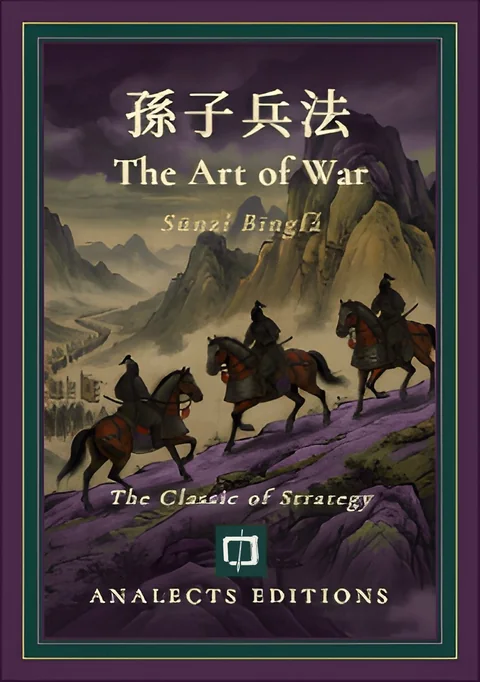
Rival early answers to the questions of war, power, public benefit and how to rule, from The Art of War and Mozi to Han Feizi. Read side by side, they form a great debate about leadership and institutions whose arguments still echo in how we think about strategy and the common good.

  • The Art of War 孫子兵法 AE-003
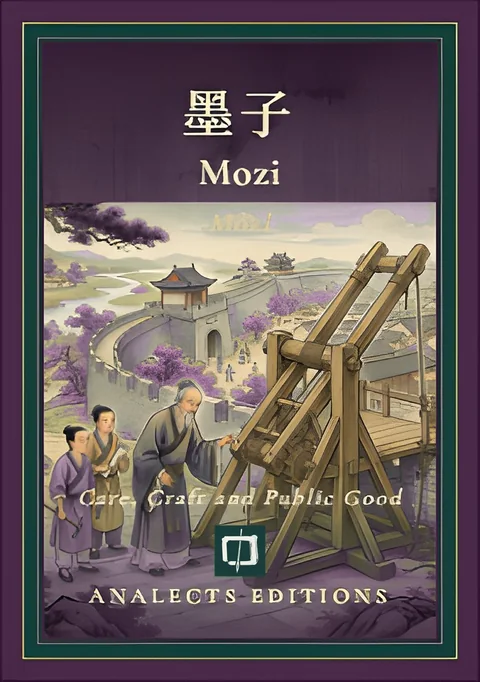
  • Mozi: Care, Merit and Public Benefit 墨子 AE-010
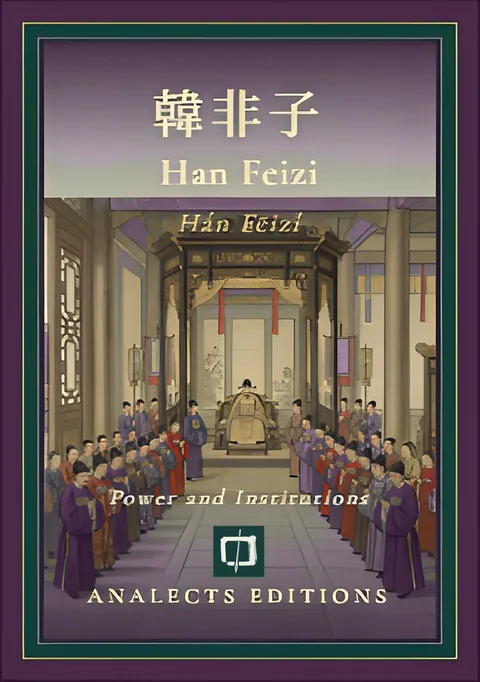
  • Han Feizi: Power and Institutions 韓非子 AE-011
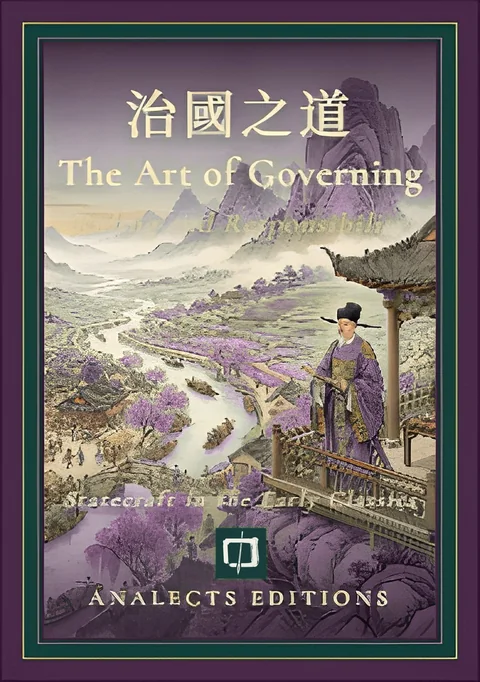
  • The Art of Governing AE-020

PrintDigital Edition Bilingual, traditional Chinese with facing English. English by James Legge where he translated the work.

The Jade Classics cover, Ethics, Strategy & Governance series: The Art of War
The Art of WarAE-003
The Jade Classics cover, Ethics, Strategy & Governance series: Mozi: Care, Merit and Public Benefit
Mozi: Care, Merit and Public BenefitAE-010
The Jade Classics cover, Ethics, Strategy & Governance series: Han Feizi: Power and Institutions
Han Feizi: Power and InstitutionsAE-011
The Jade Classics cover, Ethics, Strategy & Governance series: The Art of Governing
The Art of GoverningAE-020

Health & Wellness (Historical)

Living Well · 2 titles

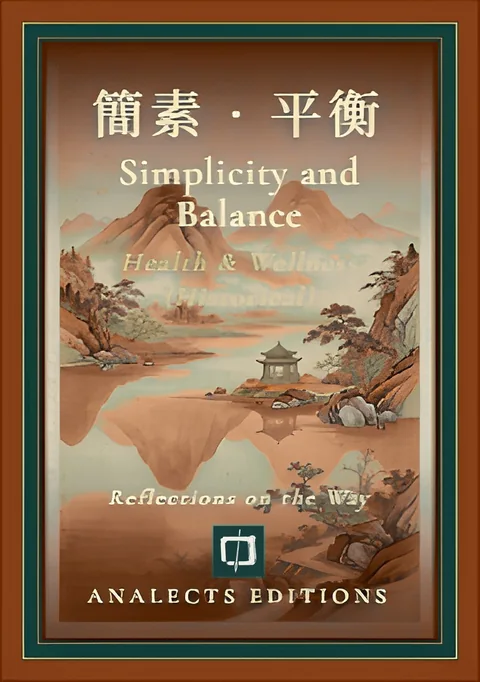
Early ideas about living well, nourishing life, simplicity and balance, drawn from Zhuangzi and the Daoist tradition. These books are read as history and philosophy, not as health guidance: a window on how early thinkers imagined a calm and well-lived life.

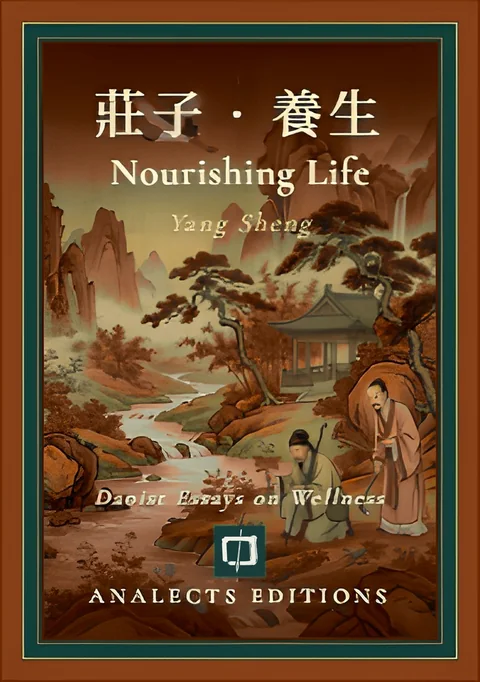
  • Nourishing Life: Readings from Zhuangzi 莊子(選篇) AE-016
  • Simplicity and Balance AE-017

PrintDigital Edition Bilingual, traditional Chinese with facing English. English translations by James Legge.
The Jade Classics cover, Health & Wellness (Historical) series: Nourishing Life: Readings from Zhuangzi
Nourishing Life: Readings from ZhuangziAE-016
The Jade Classics cover, Health & Wellness (Historical) series: Simplicity and Balance
Simplicity and BalanceAE-017

Traditional Chinese Medicine

The Healing Garden · 1 title

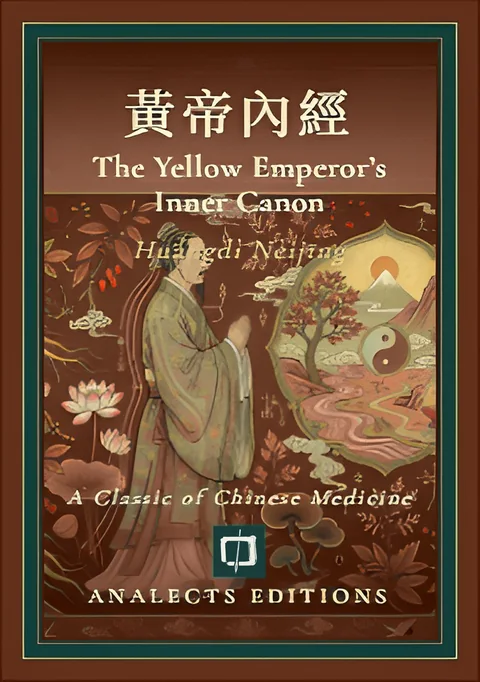
A historical reader of the Yellow Emperor's Inner Canon, the founding classic of Chinese medicine. It shows how early Chinese thinkers described the body, the seasons and the cosmos through yin and yang, qi and the five phases. A work of intellectual history, not medical advice.
  • The Yellow Emperor’s Inner Canon: A Historical Reader 黃帝內經 AE-018

PrintDigital Edition Bilingual, traditional Chinese with facing English. Authoritative English translations.

The Jade Classics cover, Traditional Chinese Medicine series: The Yellow Emperor’s Inner Canon: A Historical Reader
The Yellow Emperor’s Inner Canon: A Historical ReaderAE-018

Coming to Your Library

The Jade Classics cover: The Analects

The Analects

論語
Lúnyǔ

Sayings and conversations associated with Confucius, compiled by his followers and later generations.

Do not do to others what you would not want for yourself.
Analects 15.24
Inspired by Confucius · Bilingual · Print · Digital Edition
English translation by James Legge
The Jade Classics cover: The Great Learning and The Doctrine of the Mean

The Great Learning and The Doctrine of the Mean

大學 / 中庸
Dàxué / Zhōngyōng

Two short classics on self-cultivation, balance and constancy, from the Book of Rites.

The way of great learning lies in making bright virtue shine, in caring for the people,and in coming to rest in the highest good.
Great Learning, opening section
Inspired by Confucius · Bilingual · Print · Digital Edition
English translation by James Legge
The Jade Classics cover: The Art of War

The Art of War

孫子兵法
Sūnzǐ Bīngfǎ

The early Chinese classic on warfare, read in its military and political setting.

Know the other side and know yourself,and in a hundred battles you will not be in danger.
The Art of War ch. 3 (Planning Attacks)
Ethics, Strategy & Governance · Bilingual · Print · Digital Edition
Authoritative English translation
The Jade Classics cover: The Book of Songs: Selected Poems

The Book of Songs: Selected Poems

詩經
Shījīng

Poems of love, work, ritual and community from China's oldest anthology.

Guan guan call the ospreys on the island in the river.The graceful, good young woman is a fine match for the young lord.
Book of Songs, Mao 1 (Guan ju)
Poetry & Everyday Life · Bilingual · Print · Digital Edition
English translation by James Legge
The Jade Classics cover: The Book of Changes

The Book of Changes

易經
Yìjīng

The ancient divination classic, with its core text kept apart from later commentary.

Heaven moves with strength;in the same way the noble person strives without ceasing.
Book of Changes, Hexagram 1 (Qian), Image commentary
Classics & Cultural Foundations · Bilingual · Print · Digital Edition
English translation by James Legge
The Jade Classics cover: Xunzi: Essays on Learning

Xunzi: Essays on Learning

荀子
Xúnzǐ

Essays on education, practice, ritual and self-cultivation.

The noble person says:study must never stop.
Xunzi ch. 1 (Encouraging Learning)
Learning and Knowledge · Bilingual · Print · Digital Edition
Authoritative English translation

Wear the classics

Analects Edition windbreakers: Golden Rule, Xunzi and Zhu Xi.

Black Analects Edition Golden Rule Windbreaker
Analects Edition Golden Rule Windbreaker
Black Analects Edition Xunzi Windbreaker
Analects Edition Xunzi Windbreaker
Black Analects Edition Zhu Xi Windbreaker
Analects Edition Zhu Xi Windbreaker
A Look Inside

One passage, two ways to read it

One of the best-loved lines in the Analects, Book 2, Chapter 15, on why reading and reflection belong together, in both Analects Editions formats: the Print edition for your shelf, and the Digital Edition, a living spread that reads to you.

Print

The Jade Classics · collector's print edition

Digital Edition: the living spread

an Open Adaptive Edition

The same spread as the Print page, alive on screen. Press Read to me to hear the passage in Mandarin and English, with each character and word lit as it is read. Tap a marked character for its pinyin, meaning and sound.

Living edition · Edition current, last updated November 2, 2026

Ready. Keyboard: K play or pause, J previous, L next (while focus is in this player or spread).

Analects Editions, The Jade Classics: interior spread for Book I, On learning: warm paper pages with the Chinese 學而時習之,不亦說乎? and its pinyin, a reflective paraphrase, a soft pine line drawing with 松, and the callouts A practice, not a finish line and A note for the reader
Inside the Collector's Edition A two-page reader spread from The Jade Classics, the Analects Editions print series: Book I, On learning (Analects 1.1).
Y&Y badge
Y&Y · A Du Shu Reading brand

Y&Y: Yin & Yang

Two halves that only make sense together. Y&Y brings the old idea of yin and yang to families and couples: books for children and Y&Y Tees.

Y&Y books for children

Y&Y (Yin & Yang) books for children are stories that grow young readers into the movement, built on the same idea of two halves making one whole.

A little history. Yin and yang began as words for the shady and sunny sides of a hill, as the Book of Songs uses them. In the Warring States period, Zou Yan (about 305 to 240 BCE) of the state of Qi and the Yin-Yang School (阴阳家), one of the Hundred Schools of Thought, joined them with the five phases to explain change in nature and history. We know him mainly through Sima Qian's Shiji. Our Y&Y designs keep the old idea: two halves, one whole circle.

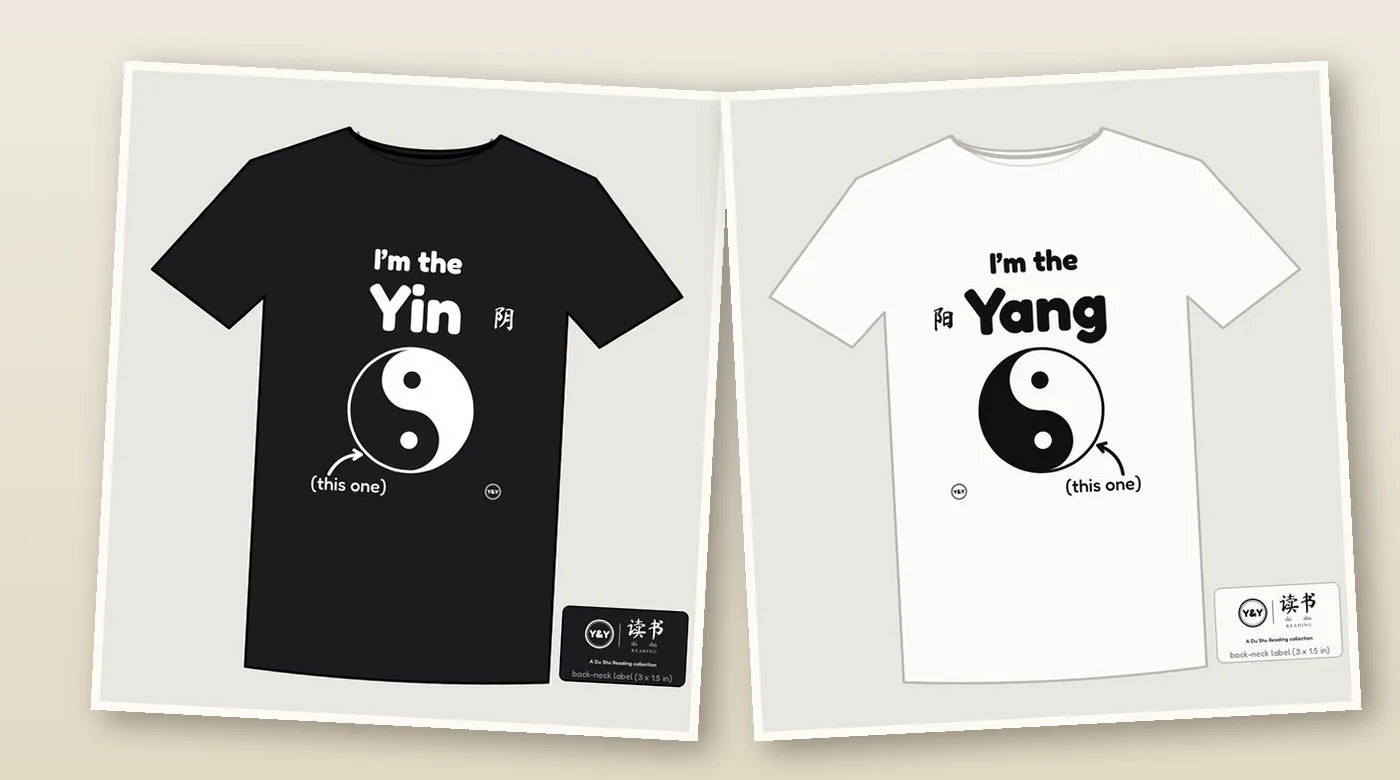
The Y&Y I'm the Yin tee in black and the I'm the Yang tee in white, side by side
Wear as a pair: I'm the Yin and I'm the Yang.

Y&Y Tees

Yin and yang, worn with a smile: fifteen tees for couples, teams and anyone finding their balance.

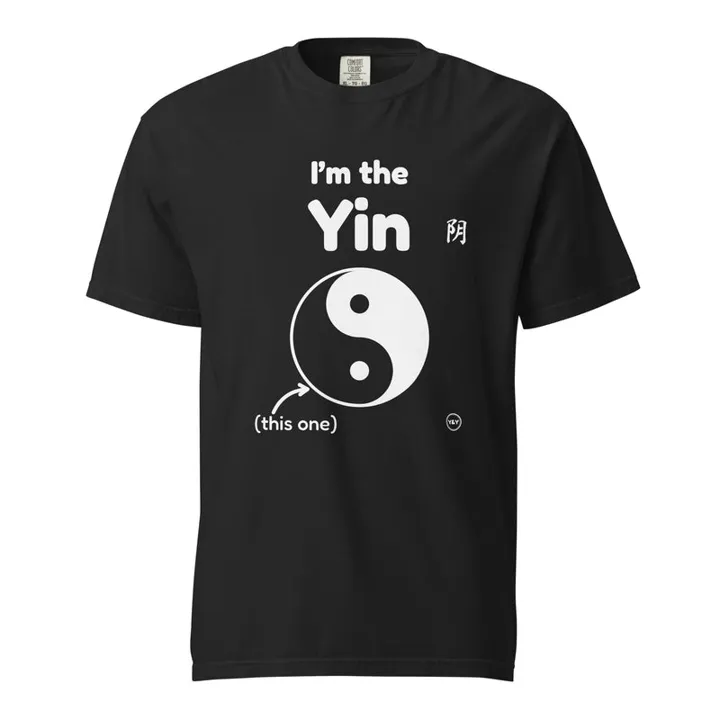
Black Y&Y I'm the Yin Tee
I'm the Yin Tee
Black
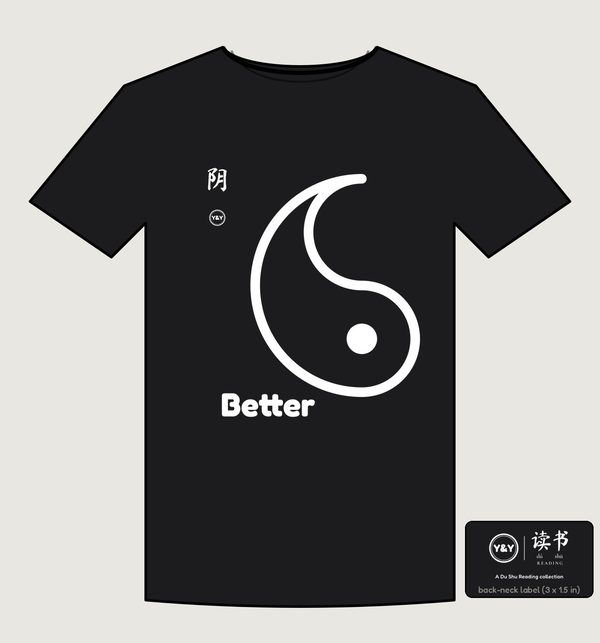
Y&Y Better Tee, the yin half of the taijitu,
Better Tee (Yin Half)
Pairs with Together Tee
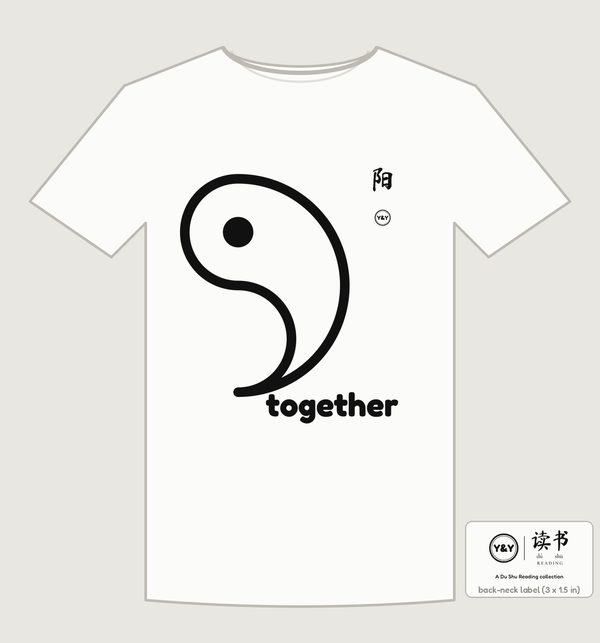
Y&Y Together Tee, the yang half of the taijitu,
Together Tee (Yang Half)
Pairs with Better Tee
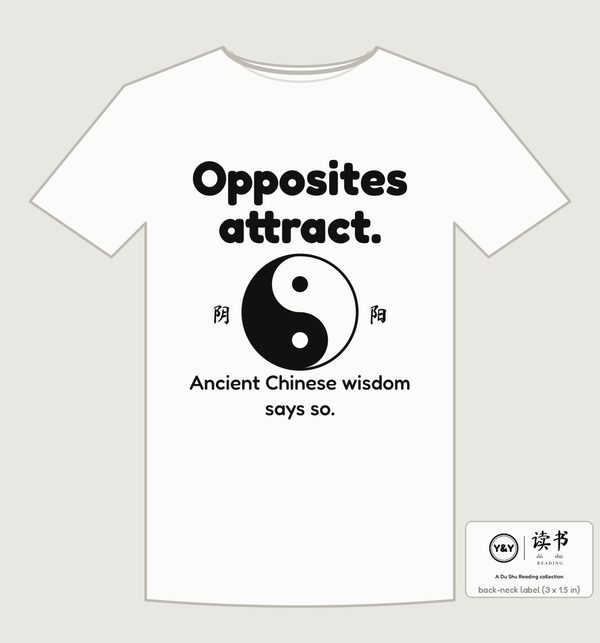
Y&Y Opposites Attract Tee
Opposites Attract Tee
Ancient Chinese wisdom says so.
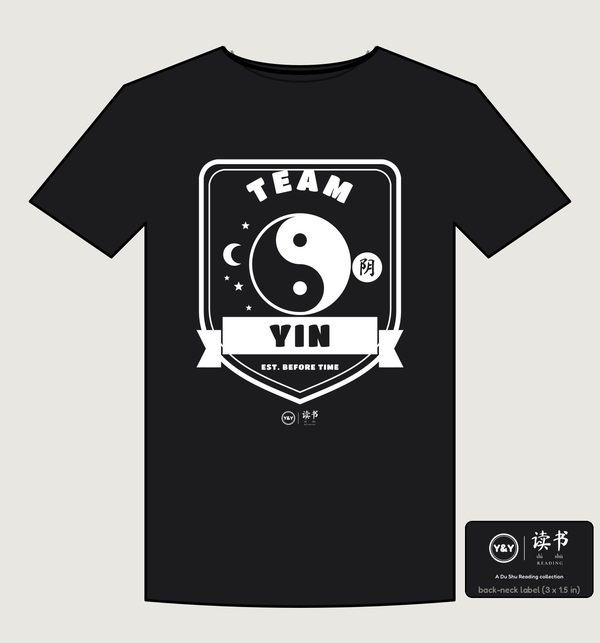
Y&Y Team Yin Crest Tee
Team Yin Crest Tee
Moon and stars on the yin side
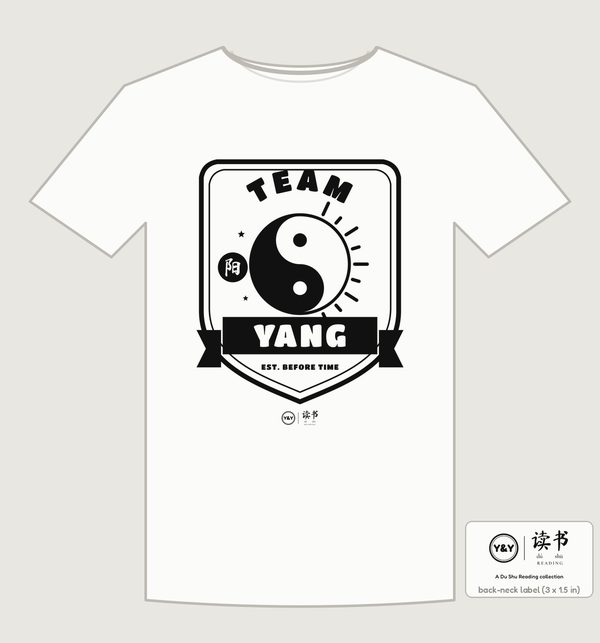
Y&Y Team Yang Crest Tee
Team Yang Crest Tee
Sun rays on the yang side
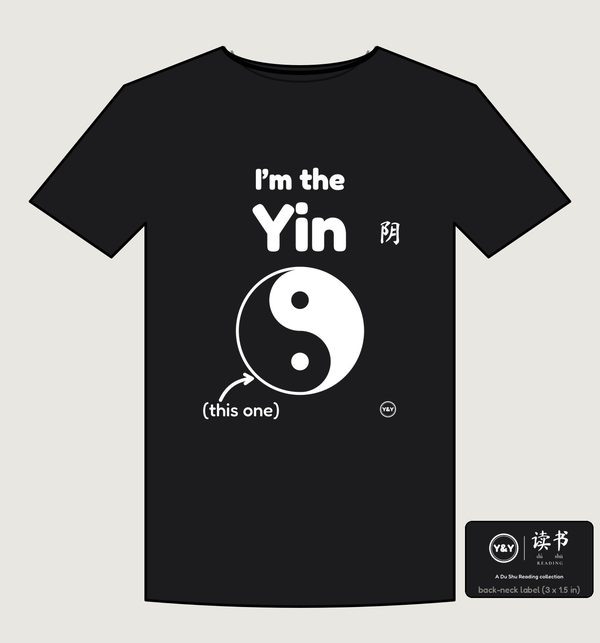
Y&Y I'm the Yin Tee
I'm the Yin Tee
Pairs with I'm the Yang
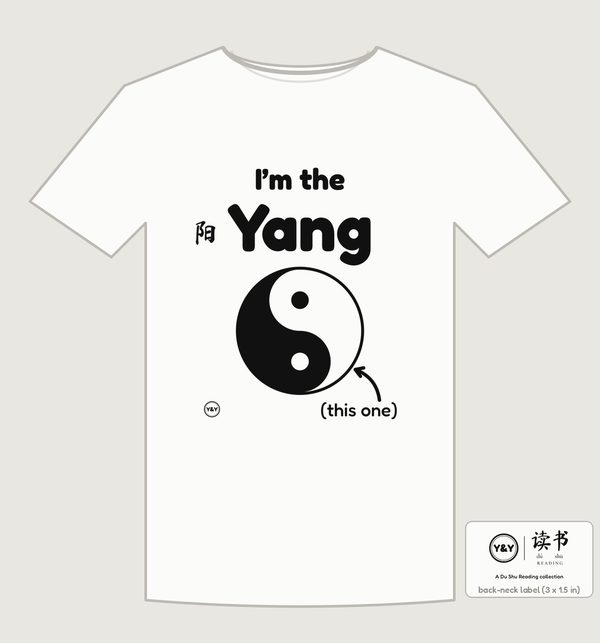
Y&Y I'm the Yang Tee
I'm the Yang Tee
Pairs with I'm the Yin
道 (dào), with 上善若水, the highest good is like water: The Tao Collection
The Tao Collection (道) · Silk, cashmere and fine things

The Tao Collection

Soft as water and quiet in their quality, these Chinese-inspired pieces in silk and cashmere carry images from ancient poetry, painting and thought.

上善若水。水善利万物而不争。

“The highest good is like water.Water is good at benefiting all things and does not compete with them.”

Dao De Jing, chapter 8
诗经
SilkBook of Songs Silk ScarfOspreys on the river, after the opening poem of the Book of Songs 诗经
上善若水
CashmereWater Calligraphy Cashmere WrapBrush calligraphy of "the highest good is like water", Dao De Jing ch. 8 上善若水
庄周梦蝶
SilkButterfly Dream Silk Pocket SquareZhuangzi's butterfly dream 庄周梦蝶
松鹤
CashmereCrane and Pine Cashmere ScarfCrane and pine, a classic pairing in Chinese painting 松鹤

Yin and Yang (阴阳)

Yin and yang (阴阳) name complementary opposites, dark and light, yielding and firm, each containing the seed of the other and held in balance.

太极图
Silk, reversible ink and ivoryTaijitu Reversible Silk ScarfThe taijitu, the diagram of the supreme ultimate 太极图
一阴一阳
Silk, set of twoInk and Ivory Silk Pocket Square Pair"One yin, one yang: this is called the Way", Book of Changes, Great Commentary 一阴一阳
阴阳
Cashmere, reversibleReversible Ink and Ivory Cashmere WrapOne side ink, one side ivory, worn either way 阴阳
线装
Silk cover, paper pagesSilk-Bound Reading JournalThread-bound in the manner of traditional Chinese books 线装

Each tile shows the motif at the heart of a piece.

Tao Collection · Yin and Yang

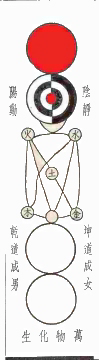
The Taijitu: Diagram of the Supreme Ultimate

太極圖 / 太极图, tàijí tú, say it “tie-JEE too.” The black and white circle you know as the yin-yang symbol has a name, a history and a meaning.

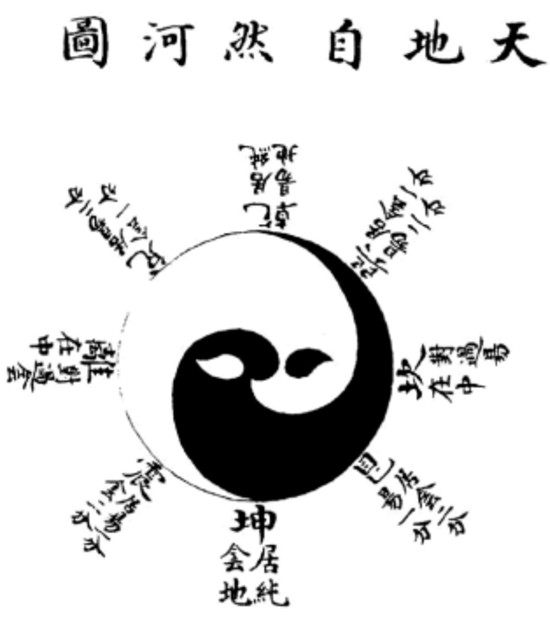
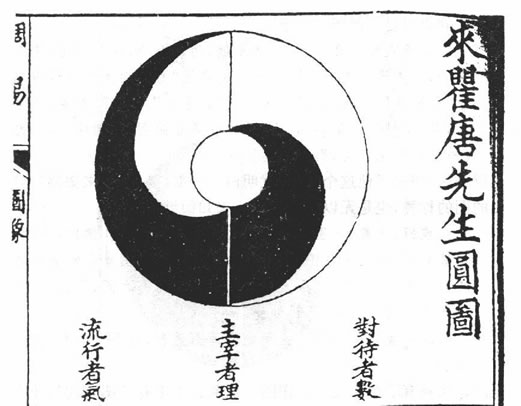
The name comes from the Song dynasty philosopher Zhou Dunyi (1017 to 1073) and his short text Explanation of the Diagram of the Supreme Ultimate. Swirling versions appeared in the Ming dynasty, from the 1370s on; the late Ming scholar Lai Zhide (1525 to 1604) simplified the picture into two interlocking spirals, and versions with the small contrasting dots, the seed of each half in the other, became common in the late Ming and Qing.

Zhou Dunyi style taijitu: a vertical column of stacked circles“ZhoushiTaijitu”, creator unknown, Wikimedia Commons, public domain (PD-old-100).
Zhao Huiqian's River Chart: an early swirling taijitu ringed by the eight trigrams“Bagua Zhao Huiqian” by Zhao Huiqian, Wikimedia Commons, public domain.
Woodblock print of two interlocking spirals, Round Diagram of Master Lai Qutang“LaishiTaijitu”, creator unknown, Wikimedia Commons, public domain (PD-old).

Tao titles in Analects Editions

Read the source of the collection: Daoist classics in the Analects Editions library, in Print and as Digital Editions.

The Jade Classics cover: Dao De Jing

Dao De Jing

道德經
Dàodéjīng

A short, poetic classic on the Way, virtue and the strength of yielding.

The highest good is like water.Water is good at benefiting all things and does not compete with them.
Dao De Jing ch. 8
Daoism & Perspective · Bilingual · Print · Digital Edition
English translation by James Legge
The Jade Classics cover: Zhuangzi: Selected Stories and Parables

Zhuangzi: Selected Stories and Parables

莊子
Zhuāngzǐ

The best-loved stories and parables of Daoism's most playful classic.

He did not know whether he was Zhou who had dreamed of being a butterfly,or a butterfly dreaming that it was Zhou.
Zhuangzi ch. 2 (On Seeing Things as Equal)
Daoism & Perspective · Bilingual · Print · Digital Edition
English translation by James Legge
Carved Chinese yellow jade bead bracelet
Chinese yellow jade

Du Shu Reading · Junzi Jade

Junzi Jade 君子玉

Fine jade jewelry

Confucius likened the virtue of the noble person to jade. In the Book of Rites, its warm, smooth lustre stands for benevolence, the first of the virtues he saw in the stone.

Junzi Jade is our boutique of fine jade jewelry, featuring yellow jade and jades rich in spiritual and historical meaning, in bracelets, necklaces and ornaments. Each piece carries the forms of early China, the bi disc and the cloud scroll, to be worn every day as a gentle reminder of the person we hope to become.

Yellow, the imperial color, made yellow jade one of the most prized stones at the Qing court. For far longer, jade itself has stood for virtue: warm, enduring and quietly radiant.

  • Polished Chinese yellow jade bangle bracelet on navy silk

    Bracelets

    Smooth bangles of yellow and green jade, cool at first touch and warm with wear.

  • Yellow jade bi disc pendant on a red silk cord

    Necklaces

    Bi disc pendants and carved charms on silk cord, close to the heart.

  • Hand-carved Chinese yellow jade fish ornament on navy silk

    Ornaments

    Carved pieces for the desk and the home, with motifs drawn from ancient meaning.

    The jade fish, a symbol of abundance 年年有餘

君子比德於玉

Confucius likened the virtue of the noble person to jade.

Book of Rites (Liji), Pin Yi

Join the list to be first to see the collection.

Be first to see Junzi Jade
Du Shu Reading · Du Shu Life

Wear the reminder

Everyday pieces carrying the 读书 brush mark, for the reading life: at the desk, on the go, with the whole family.

Model wearing the ivory Dushu Reading Heavyweight Tee with the 读书 mark on the chest
Dushu Reading Heavyweight TeeSandstone, Khaki & Ivory
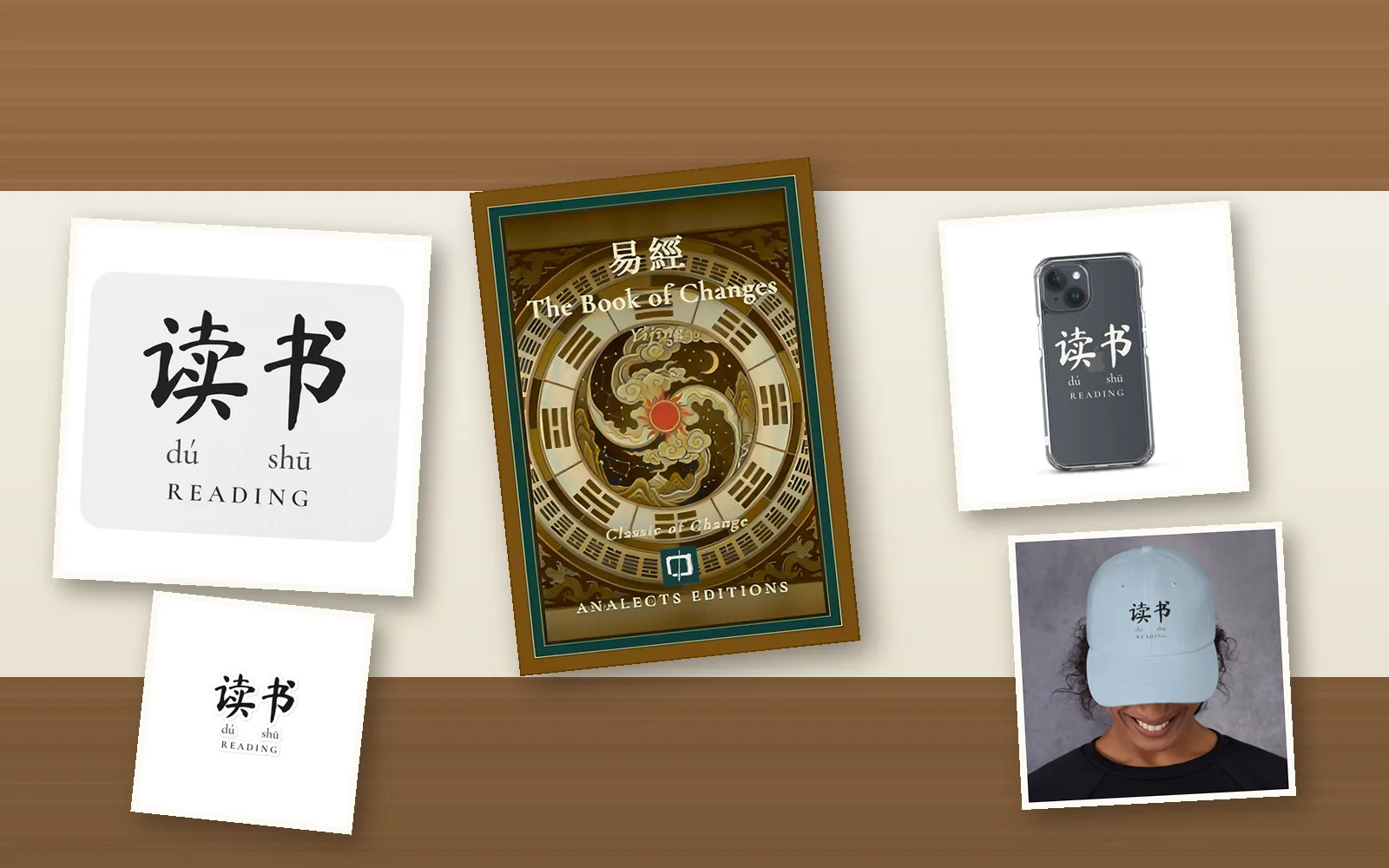
Styled arrangement on a wooden table: Du Shu mouse pad, kiss-cut sticker, clear iPhone case, dad hat and The Book of Changes from The Jade Classics
Styled togetherMouse pad, sticker, clear case, dad hat and a Jade Classics cover
Woman holding the white glossy Du Shu mug
White glossy mug
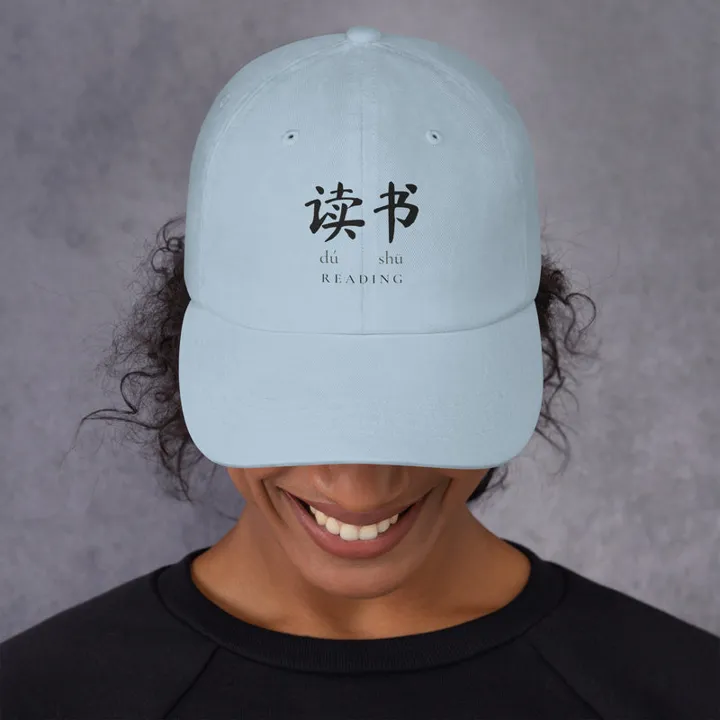
Light blue Du Shu dad hat with the 读书 logo, worn
Dad hat
Child wearing the black Dushu Reading Kids Organic Tee
Dushu Reading Kids Organic TeeInk Black
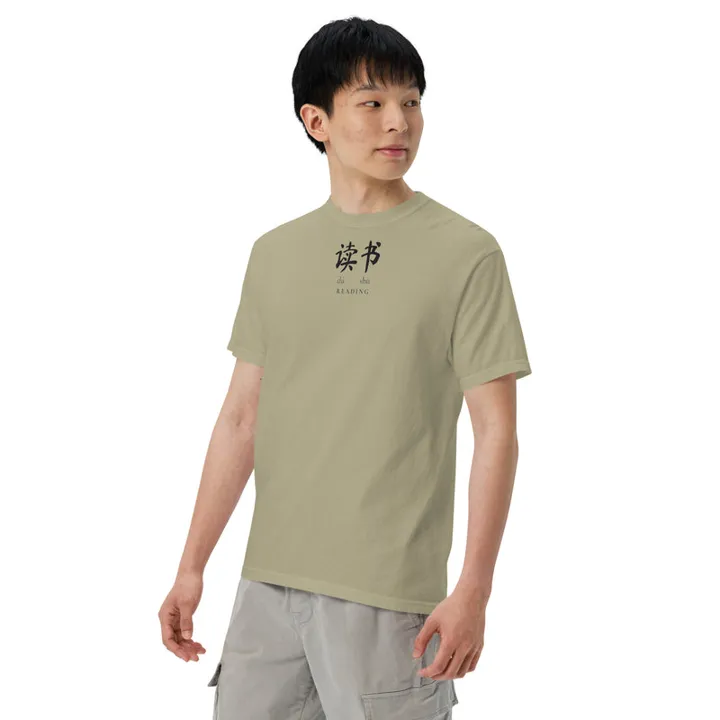
Model wearing the khaki Dushu Reading Heavyweight Tee
Dushu Reading Heavyweight TeeKhaki
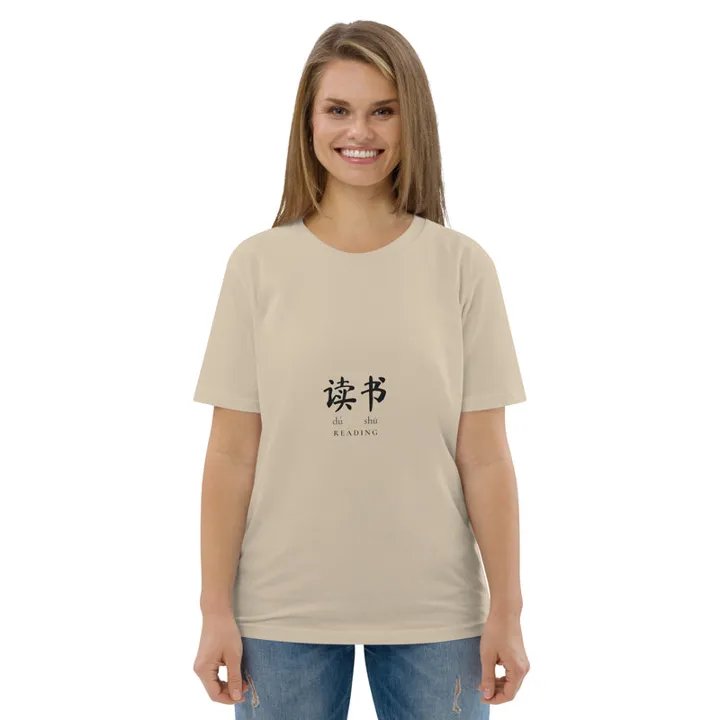
Model wearing the Unisex Organic Cotton Creator 2.0 T-Shirt with the 读书 mark
Unisex Organic Cotton Creator 2.0 T-Shirt
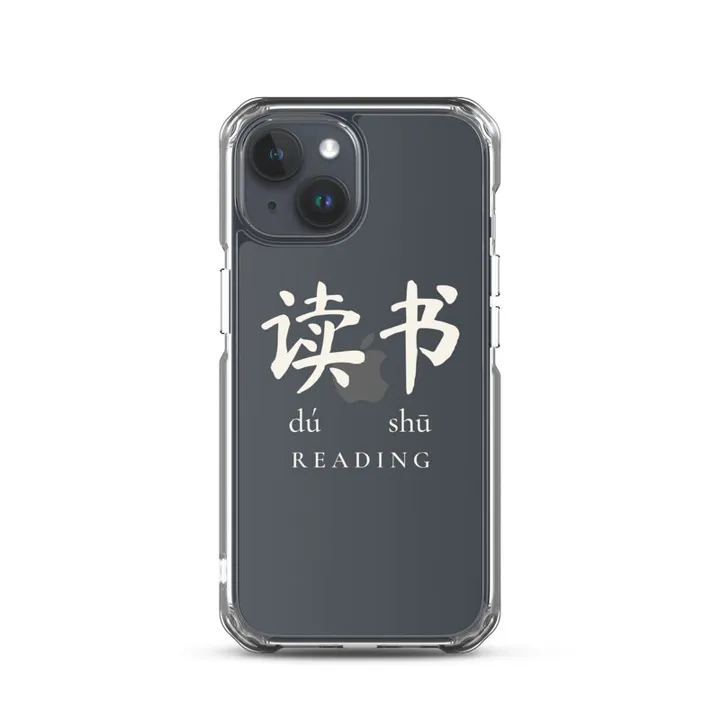
Clear iPhone case with the white 读书 dú shū READING logo
AccessoriesClear Case for iPhone®
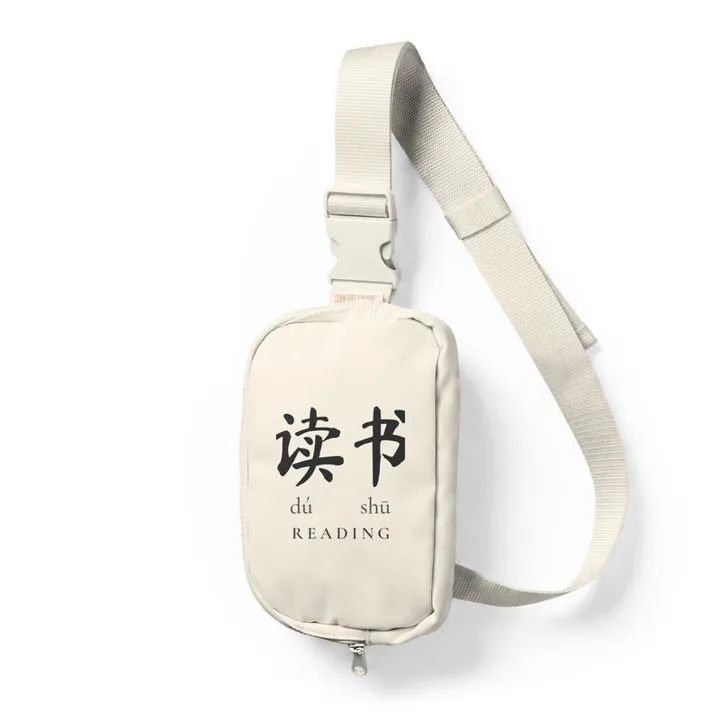
Ivory sling bag with the 读书 logo
BagsDushu Reading Sling Bag, Ivory
Military green women's cropped hoodie with a small 读书 mark
ApparelDushu Reading Women's Cropped Hoodie
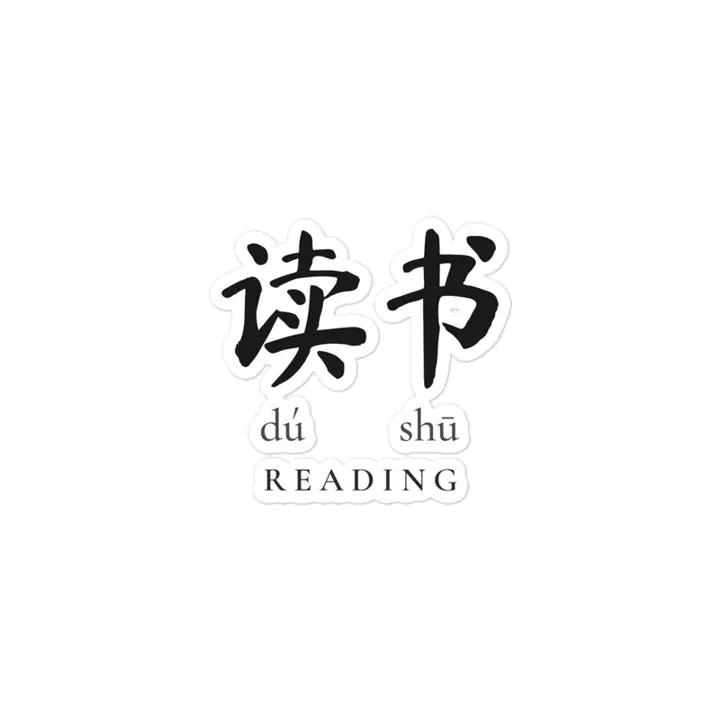
Kiss-cut sticker with the 读书 dú shū READING logo
StationeryKiss-cut sticker

Join the movement to be first to know when the shop opens.

Join the Du Shu Movement

Read deeply, elevate your learning, and learn from the masters. Be the first to hear when Analects Editions, Y&Y and the Tao Collection open.